Call 24/7
(602) 686-9936


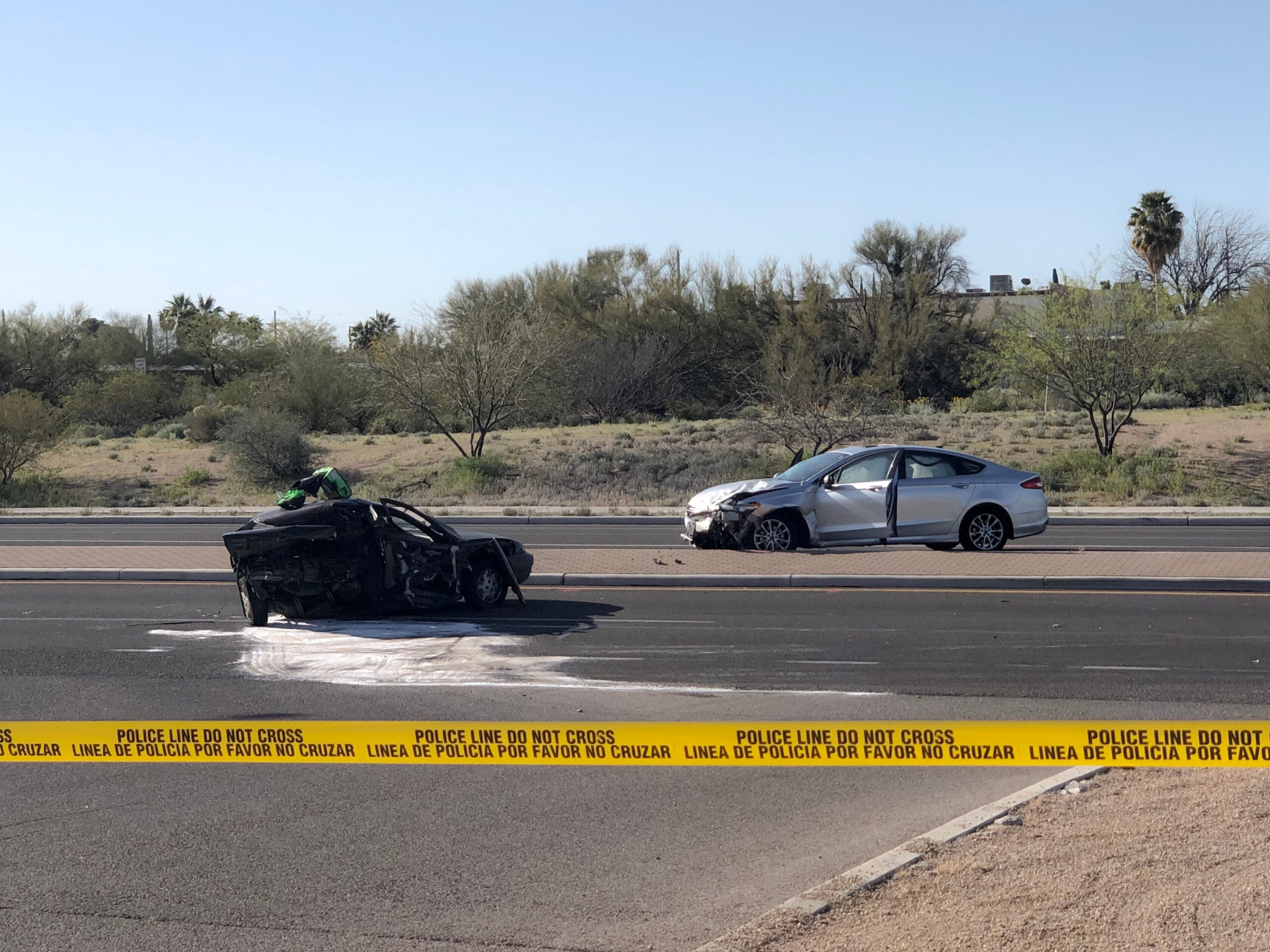
Your car is totaled, your neck hurts, and now you’re staring at two different insurance companies wondering which one is actually supposed to pay for any of it. If that’s where you’re at right now, here’s the short answer: Arizona is an at-fault state, not a no-fault state, and that one distinction shapes almost everything about how your claim will play out from here.
Desert Star Law Group was founded on a commitment to put Arizona injury victims first. Our Phoenix car accident attorneys help clients navigate insurance claims, investigate crashes, and pursue compensation for injuries and losses caused by another driver’s negligence.
Call us today at (602) 686-9936 for a free consultation to talk through your situation.
In an at-fault state, the driver who caused the accident may be legally responsible for the resulting damages. Their liability insurance may provide coverage for those losses, subject to the policy terms and available coverage limits. Rather than each driver turning to their own insurance regardless of who caused the crash, Arizona’s system requires identifying who was actually negligent before determining who pays.
No-fault insurance systems generally require an injured driver to first seek certain injury benefits from their own insurance company, regardless of who caused the accident, often with limitations on when they can pursue a claim against the at-fault driver directly.
Arizona’s at-fault system allows an injured person to pursue a claim against the driver who caused the crash and, in many cases, that driver’s liability insurance company.
In Arizona, the at-fault driver may be liable for an injured person’s medical expenses, vehicle damage, lost income, pain and suffering, and other legally recoverable losses. The at-fault driver’s liability insurer may pay covered damages up to the available policy limits.
An injured person in Arizona may seek compensation for pain and suffering and other non-economic losses when supported by the facts of the case. Unlike many no-fault states, Arizona does not require an injured driver to meet a no-fault injury threshold before pursuing a claim against the at-fault driver.
Successfully pursuing a claim in Arizona generally requires proving that the other driver was negligent, meaning they failed to exercise reasonable care while driving, and that this negligence directly caused the accident and resulting damages.
Evidence supporting this can include the police accident report, photographs of the crash scene, witness statements, traffic camera footage, vehicle damage, medical records, and, in more complex cases, expert analysis reconstructing how the crash occurred.
Arizona follows a pure comparative negligence rule. In many accident cases, an injured person may still pursue compensation even if they share responsibility for the crash, but their recovery is generally reduced by their percentage of fault.
Under this rule, an injured driver’s compensation is reduced by their own percentage of fault. For example, a driver found 20% at fault for a crash would have their compensation reduced by that same percentage. Insurance companies are well aware of this rule and will often try to shift additional fault onto the injured driver specifically to reduce what they ultimately have to pay.
Call Desert Star Law Group at (602) 686-9936 for a free consultation if an insurance company is disputing your share of fault after an accident.
After a car accident, insurance coverage often determines how much compensation is available for medical bills, lost income, vehicle damage, and other losses. Arizona law requires motorists to carry liability insurance, but the state’s minimum limits may fall far short after a serious collision.
Understanding the at-fault driver’s policy and your own available coverage, including uninsured and underinsured motorist protection, is an important first step toward pursuing a full recovery.
Arizona requires every motor vehicle operated on state roadways to carry liability insurance. The minimum required coverage, often called 25/50/15, includes:
These limits are intended to provide compensation when an insured driver causes a crash, but they can be quickly exhausted by emergency treatment, ongoing medical care, lost wages, or substantial vehicle damage. Liability insurance generally pays for the losses of other people harmed by the at-fault driver, not the at-fault driver’s own injuries or vehicle repairs.
Arizona does not require drivers to buy uninsured motorist (UM) or underinsured motorist (UIM) coverage, but insurers must make both options available in writing when they sell an auto liability policy. Under A.R.S. § 20-259.01, insurers must offer UM and UIM coverage in writing. A policyholder may select UM and UIM limits up to the bodily injury liability limits on their policy, subject to the policy terms and applicable law.
UM coverage may apply when the at-fault driver has no applicable liability insurance and may apply in certain hit-and-run situations, depending on the facts and policy language. UIM coverage may apply when the at-fault driver has liability insurance, but the available limits are not enough to cover the injured person’s covered damages.
If the at-fault driver’s insurance limits are not enough to cover your losses, your own UM or UIM coverage may provide an additional source of compensation. Whether coverage applies depends on the policy limits, policy terms, available liability coverage, and the nature and value of your damages. Understanding what coverage is available, both from the at-fault driver and your own policy, is an important part of securing your recovery after a serious accident.
Drivers in Arizona who operate a vehicle without the state’s required minimum insurance coverage can face fines, license suspension, and other penalties, separate from any civil liability they may face for causing an accident.
If you were not at fault for the accident, you may still pursue a claim against the responsible driver and their liability insurer even if you do not have your own auto insurance. However, without your own collision, medical payments, UM, or UIM coverage, you may have fewer insurance options available while your claim is pending.
If you are hit by an uninsured driver, your own uninsured motorist coverage, if you have it, becomes an important resource for recovering compensation. Without that coverage, pursuing a claim directly against an uninsured at-fault driver can be more difficult, since the driver’s personal assets, if any, may be the only source of recovery.
Contact Desert Star Law Group online to discuss your Phoenix car accident claim if you were hit by an uninsured or underinsured driver.
While many car accident claims resolve through insurance negotiations, a lawsuit may become necessary if the insurance company disputes liability, offers an unreasonably low settlement, or if the case involves complex facts requiring a court’s determination of fault and damages.
Most Arizona personal injury lawsuits arising from car accidents must be filed within two years of the date the claim accrues, often the date of the crash. Exceptions may apply, and claims involving a government entity or public employee can carry substantially shorter notice requirements. Missing an applicable deadline can jeopardize your right to seek compensation, so it is important to speak with an attorney as soon as possible.
After a car accident, insurance companies often move quickly to limit what they pay. Desert Star Law Group helps injured people throughout Phoenix by investigating the collision, identifying all available insurance coverage, and building a clear claim for the compensation needed to move forward.
Our team gathers police reports, witness statements, crash-scene evidence, vehicle information, medical records, and other documentation that can help establish fault. We also handle communications with insurers so clients can focus on treatment and recovery rather than pressure from adjusters or confusing paperwork.
At Desert Star Law Group, we put the client first. We work to connect clients with quality medical care, including when they do not have health insurance, and can help locate trusted mechanics when a damaged vehicle needs attention. We also stand behind a core commitment: our clients always receive more from a settlement than the firm takes in fees, even when that requires us to reduce our own fee.
Whether the collision happened on I-10, Loop 202, or a Phoenix neighborhood street, Desert Star Law Group is prepared to investigate the crash, address insurance-company tactics, and pursue the compensation available under Arizona law. Call Desert Star Law Group at (602) 686-9936 for a free consultation.
If you have been injured in a car accident in Arizona, do not wait to get legal guidance. Contact Desert Star Law Group at (602) 686-9936 for a free consultation, and let us help you understand your options and pursue the compensation you deserve.